
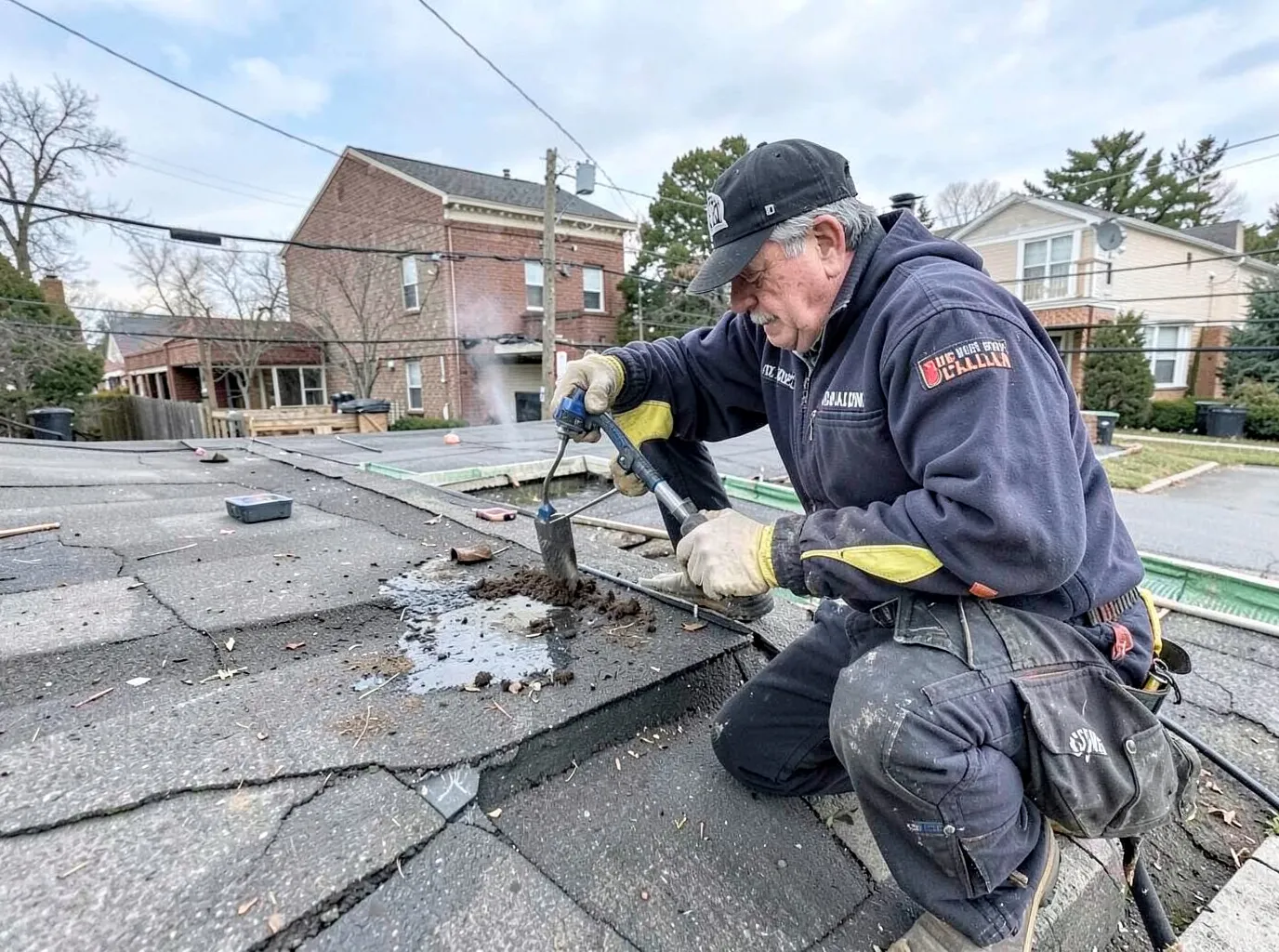
O'Fallon homes, many built between the 1970s and early 2000s with standard asphalt shingles, face repeated leaks where wind-driven rain pushes water under lifted edges during summer thunderstorms common to the area. Flashing around chimneys, skylights, and step-down walls often fails first because the original metal was not stepped properly into the brick or siding. Once water reaches the decking, it travels laterally along the plywood seams before showing up in ceilings, which is why attic checks must extend well beyond the visible wet spot.
Ice dam formation along north-facing eaves becomes an issue after January or February snow events when daytime melt refreezes overnight, forcing water under shingles at the roof edge. Split-level and ranch homes in neighborhoods like Dardenne Prairie and along Highway K see this pattern frequently because their lower roof sections sit directly above living space with limited attic ventilation. Temporary fixes using self-adhered membrane and furring strips can hold until a permanent replacement, but homeowners need to understand that these patches must be removed and the deck dried before the final layer goes down.
St. Charles County permitting requires that any roof work affecting more than one square be documented if the structure is in a floodplain zone, which covers portions of eastern O'Fallon near the Missouri River. Crews arriving after hours still carry tarps and weights sized for the 30- to 40-mph gusts that often accompany the initial storm cell, because leaving a hole exposed overnight risks additional interior damage that insurance adjusters will question later.
Technician insight
In O'Fallon, the thing that catches most people out with Emergency Roof Leak Repair (24/7) is how fast water travels under the 20- to 30-year-old shingles on the split-level homes common here once it gets past the step flashing, especially on the lower roof sections that sit right above bedrooms.
Wind-driven leak on a Dardenne Prairie ranch
Heavy rain from a June cell pushed water under lifted shingles at the chimney on a 1987 ranch. The homeowner noticed ceiling stains two days later. We traced the path across two truss bays, replaced the corroded flashing, and added a new cricket to divert future flow.
Emergency Roof Leak Repair (24/7) Services We Offer
✓Storm Damage Leak Patching
Immediate sealing of wind-lifted shingles and punctures after summer thunderstorms that hit O'Fallon hardest.
✓Flashing and Valley Repair
Replacement of corroded step flashing and valley metal where water migrates under shingles on older ranch homes.
✓Chimney and Skylight Leak Sealing
Re-sealing counter flashing and skylight curbs that fail after repeated freeze-thaw cycles in St. Charles County winters.
✓Attic Leak Tracing and Containment
Systematic inspection from ridge to eave to locate the true entry point before water reaches drywall in split-level layouts.
✓Ice Dam Emergency Response
Removal of ice dams and installation of temporary heat tape or membrane to stop meltwater intrusion on north-facing eaves.
✓Gutter Overflow Leak Correction
Clearing and re-sloping gutters that back up during heavy rains and push water behind fascia boards common on 1980s O'Fallon construction.
Emergency Roof Leak Repair (24/7) Cost in O'Fallon, MO
| Service | Typical Range | What Affects It |
|---|---|---|
| After-hours dispatch and temporary seal | $175–$350 | Higher end for steep roofs or when tarps must be secured against forecast wind |
| Flashing or valley section repair | $300–$650 | Depends on linear feet and whether new step flashing must be woven into existing shingles |
| Ice dam removal and edge membrane | $250–$500 | Includes heat tape placement when daytime temps stay below freezing |
| Full leak tracing with moisture meter | $125–$225 | Waived if repair work proceeds the same visit |
Ranges are typical for O'Fallon, MO and confirmed with an exact written quote before any work starts.
How it works
- 1
Dispatch and Initial Questions
Owner takes the call, asks about recent weather, visible interior water location, and roof age to prepare the right materials before leaving the O'Fallon shop.
- 2
On-Site Safety and Temporary Seal
Crew assesses access, applies self-adhered membrane or tarp weighted for local wind, and photographs everything for the homeowner's records.
- 3
Source Identification
Technician enters the attic with lights and moisture meter, traces the path from wet insulation back to the actual roof penetration.
- 4
Permanent Repair and Dry-Out Advice
Shingle or flashing work is completed, damaged decking noted, and homeowner receives guidance on running fans to dry attic space before insulation replacement.
Pricing
Upfront pricing after the attic and roof walk, with the largest variables being roof pitch, access, and whether decking must be replaced.