
2026-10-11 ·
Ice Dams: Why They Cause Leaks & How to Stop Them
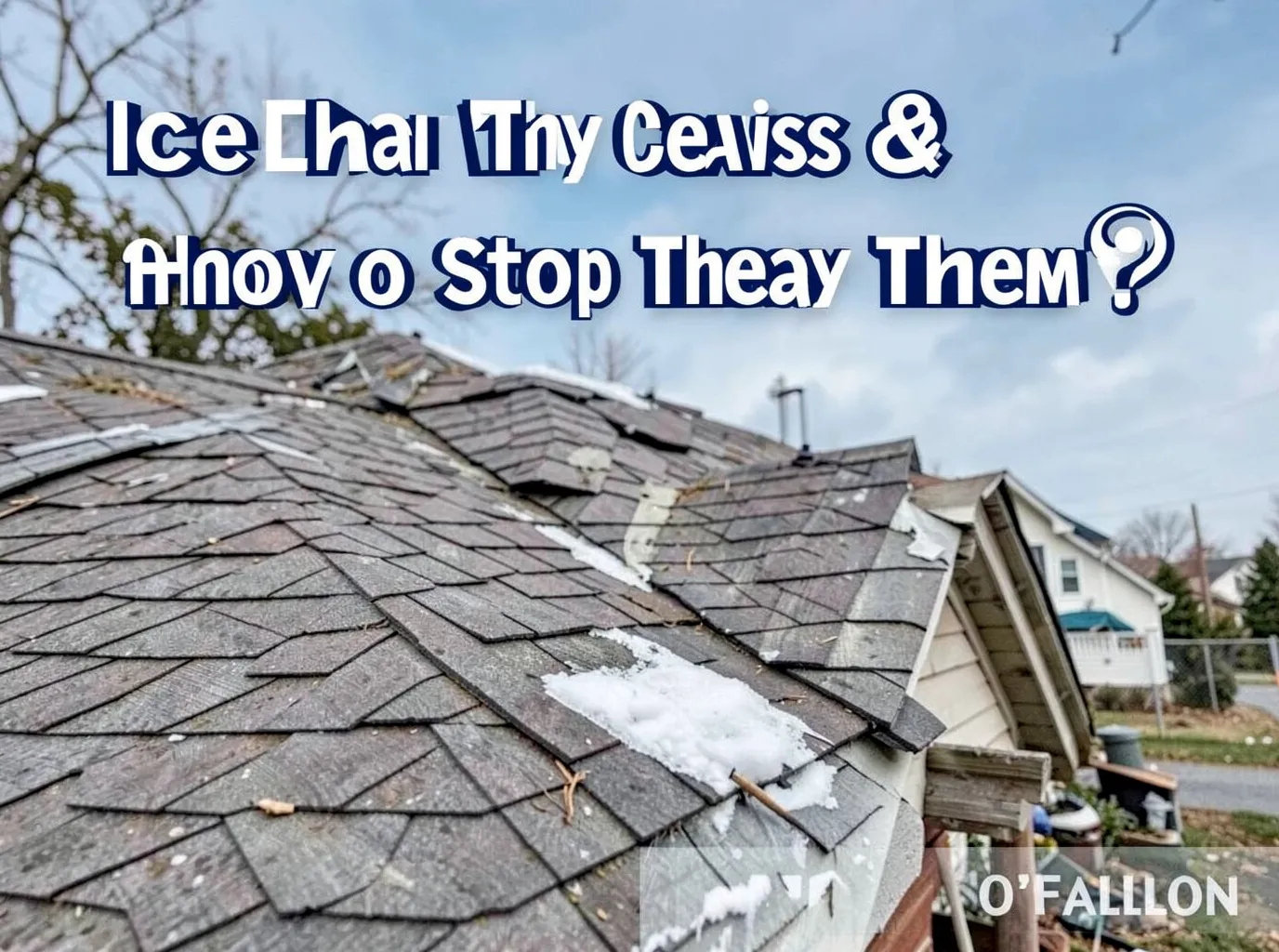
Ice dams cause leaks on O'Fallon roofs when melting snow refreezes at the eaves and forces water under shingles into the attic and walls. The process starts with uneven roof temperatures that turn a normal snowfall into a persistent water intrusion problem on homes throughout Twin Chimneys, Legacy Point, and Aberdeen.
How Ice Dams Form During Missouri Winters
O'Fallon sits in St. Charles County where winter temperatures often cycle between the mid-30s and below freezing. Heat escaping from living spaces warms the upper roof slope, melting snow that slides down and freezes again at the colder eaves. This cycle repeats after each storm, building a ridge of ice that acts like a dam. Homes in neighborhoods such as Homefield and Carriage Hills commonly show this pattern because many were built with standard insulation levels that allow attic heat loss. The same freeze-thaw sequence affects houses in Fort Zumwalt Heights and Falcon Crest when daytime sun warms south-facing slopes while north eaves stay cold.
Why Ice Dams Push Water Under Shingles
Once the ice ridge forms, water from melting snow has nowhere to go except underneath the shingles. Asphalt shingles rely on gravity and overlap to shed water, but standing water at the eaves seeps past the sealant strips and reaches the underlayment or decking. In older O'Fallon homes this often reaches the interior within days, staining ceilings or soaking insulation. The problem grows worse on roofs with limited overhang or poor flashing at valleys and chimneys. Water that penetrates during these events can travel several feet inward before dripping, making the source hard to spot without a full inspection.
Practical Steps That Reduce Ice Dam Formation
Improving attic insulation and ventilation keeps the roof deck closer to outdoor temperature so snow stays frozen until it melts evenly. Sealing gaps around recessed lights, plumbing vents, and attic hatches cuts the heat that drives the melt-refreeze cycle. Clearing gutters and downspouts before winter lets meltwater flow away instead of pooling at the edge. Homeowners in Deer Creek Estates and St. Paul often add additional roof-edge ventilation or baffles to maintain airflow along the soffits. These changes address the temperature difference that allows dams to grow after typical 4- to 8-inch snowfalls common in the area.
Routine checks of shingle condition and flashing around chimneys help before the first hard freeze. O'Fallon Seasonal Roof Maintenance Checklist (Spring/Fall) outlines the fall tasks that reduce ice dam risk on local homes.
When Professional Removal Becomes Necessary
When dams have already formed and water is entering the home, mechanical removal or targeted heat application prevents further interior damage. Crews working in Cottleville and Dardenne Prairie use roof rakes from ladders or ground level to clear the ridge without walking on ice-covered shingles. In active leak situations, temporary measures protect the interior until permanent fixes are complete. Emergency Roof Leak Repair (24/7) crews respond to these calls across St. Charles County when ceilings begin to stain or insulation gets wet.
Longer-term prevention often includes adding ice-and-water shield along the lower roof edge during re-roofing projects. This membrane extends protection several feet up the slope where dams typically form. Ice Dam Removal & Prevention outlines the inspection points used on homes in Lake Saint Louis and Wentzville that experience repeated winter leaks.